
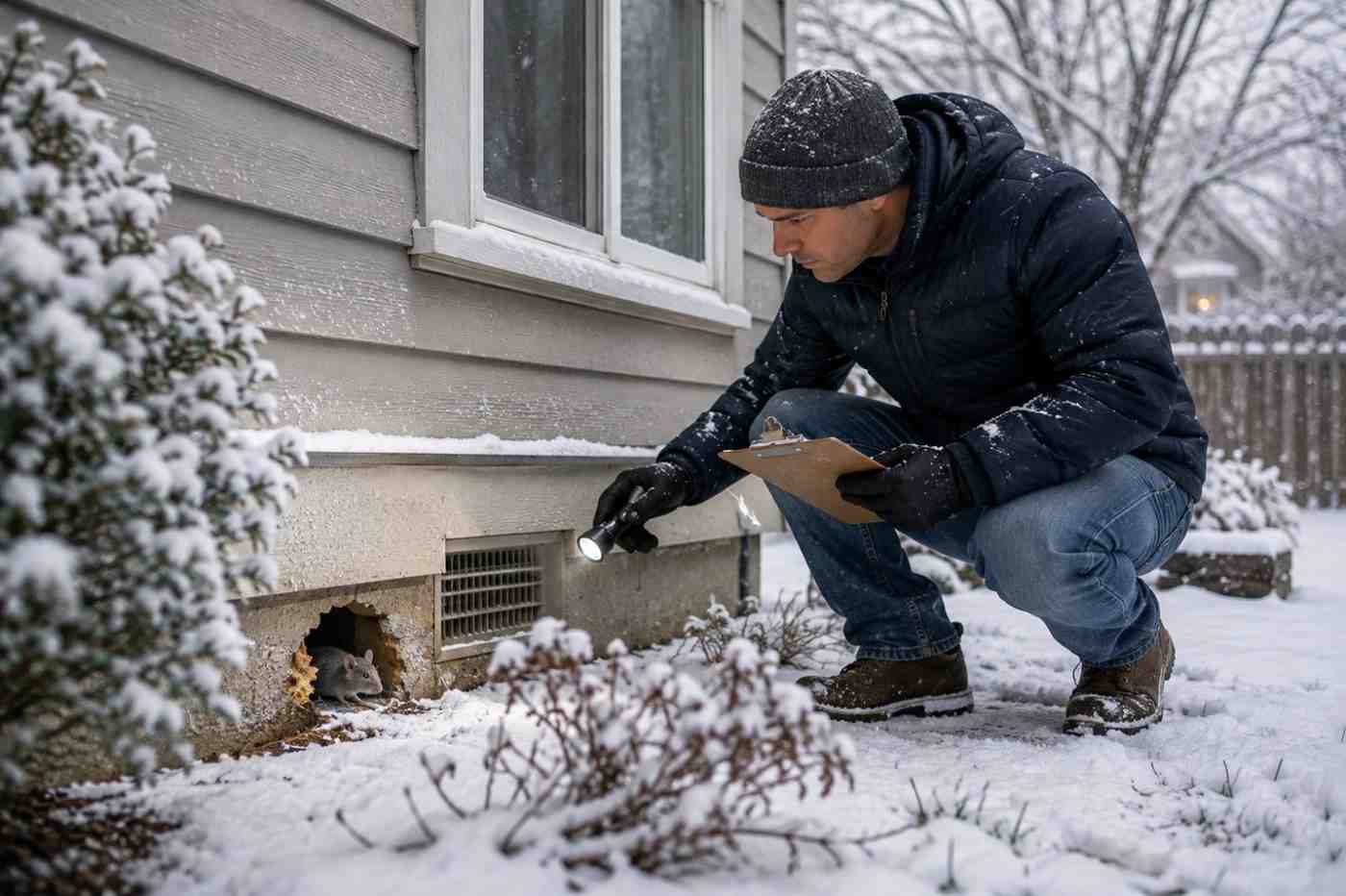
As temperatures drop, pests start looking for the same thing you want in winter: a warm, dry place to hide. Mice, cockroaches, spiders, ants, stink bugs, and other insects and rodents all try to slip indoors once the weather turns cold. Learning how to pest-proof your home before winter now, while it’s still fall, is far easier than dealing with an infestation once pests are already settled in your walls, attic, or basement.
Fall is the ideal window for this work. Pests are actively searching for entry points, but they haven’t yet nested indoors, so sealing gaps and removing attractants at this stage stops problems before they start.
How to Pest-Proof Your Home Before Winter: Quick To-Do List
To pest-proof your home before winter, seal cracks and gaps around your foundation, doors, windows, and utility lines, repair damaged screens and vents, store food in airtight containers, remove outdoor clutter and firewood from the house, fix moisture problems, and inspect the attic, basement, garage, and crawl spaces for early signs of pest activity.
- Seal cracks and gaps in the foundation and walls.
- Repair damaged screens and vents.
- Close gaps around doors and windows.
- Store food in sealed, pest-proof containers.
- Remove outdoor debris and clutter near the home.
- Fix moisture problems and leaks.
- Keep firewood at least 20 feet from the house.
- Inspect the attic, basement, garage, and crawl spaces.
- Check for droppings, nests, or other signs of pests.
- Schedule professional pest control if activity is already present.
Why Do Pests Enter Homes During Winter?
Pests move indoors for the same basic reasons every year: warmth, food, and water. As outdoor temperatures fall, insects and rodents lose access to the conditions they need to survive, so they seek out sheltered spaces close to a stable heat source.
A home offers all three essentials. Kitchens and pantries provide food, plumbing and condensation provide water, and heated living spaces provide warmth that outdoor environments can no longer match. Rodents in particular are strong, persistent nest-builders and will squeeze through remarkably small openings to reach insulation, wall voids, or storage boxes where they can burrow in for the season.
Many insects don’t need to travel far. Spiders, ants, and stink bugs often overwinter in wall cavities, attics, basements, and garages, entering through the same small gaps rodents use, then going dormant until conditions warm up again. Because these pests settle in before the coldest weather hits, preventing entry in fall is far simpler than removing an established colony or nest in January.
Common Winter Pests to Watch For
Mice and rats
Enter through gaps as small as a quarter-inch (mice) or half-inch (rats), often near the foundation, garage, or utility lines. They hide in wall voids, attics, and cluttered storage areas. Food left in cardboard or paper packaging is a major draw.
Prevention: seal entry points and store food in airtight containers.
Cockroaches
Slip in through drain pipes, cracks near plumbing, and gaps around doors. They hide in warm, moist areas like kitchens and bathrooms. Food residue and standing water attract them.
Prevention: fix leaks, keep counters clean, and seal plumbing penetrations.
Spiders
Enter through gaps around windows, doors, and vents, often following other insects that serve as a food source. They hide in basements, garages, attics, and undisturbed corners.
Prevention: reduce clutter and seal exterior gaps.
Ants
Find their way in through tiny cracks in the foundation or around windows, especially when searching for warmth. They hide in wall voids and beneath flooring near moisture sources. Sweet or greasy food residue attracts them.
Prevention: clean spills promptly and seal foundation cracks.
Stink bugs
Cluster on sun-warmed exterior walls in fall, then squeeze through screens, vents, and siding gaps. They hide in attics and wall cavities over winter.
Prevention: repair damaged screens and seal gaps around siding and trim.
Fall Pest Proofing: Inspect These Entry Points
Most winter pest problems trace back to a handful of overlooked openings. A thorough fall inspection should cover:
- Foundation cracks – Seal with masonry caulk or hydraulic cement.
- Gaps around doors and windows – Install weatherstripping and door sweeps.
- Garage doors – Add a bottom seal if light is visible underneath.
- Utility pipe openings and plumbing penetrations – Fill gaps with steel wool and caulk or expanding foam.
- Roof and soffit gaps – Repair with flashing or hardware cloth.
- Vents and chimneys – Cover with mesh screens rated for pest exclusion.
- Damaged window and door screens – Patch or replace torn mesh.
- Attic openings – Check soffit vents and gable vents for gaps.
- Crawl spaces – Seal vents and repair damaged access doors.
- Gaps around AC lines and electrical conduits – Fill with caulk or foam sealant.
Steel wool combined with caulk works well for small rodent-prone gaps, since rodents generally won’t chew through it. For larger openings, hardware cloth or metal flashing provides a more durable barrier.
Winter Pest Prevention: 10 Steps to Protect Your Home
- Seal cracks and gaps around the foundation, siding, and utility lines with caulk or expanding foam.
- Install or repair door sweeps on all exterior doors, including the garage.
- Repair window screens and make sure all windows close and latch fully.
- Store food in sealed containers, including pet food and birdseed.
- Keep garbage containers closed with tight-fitting lids, and take out trash regularly.
- Reduce moisture by fixing leaks, using dehumidifiers in damp areas, and improving ventilation.
- Clean gutters so water drains away from the foundation instead of pooling near it.
- Trim vegetation so branches and shrubs don’t touch the house or provide a bridge indoors.
- Move firewood away from the foundation and off the ground.
- Remove outdoor clutter like leaf piles, wood scraps, and unused containers that offer shelter.
Inspecting storage areas and monitoring for early pest activity throughout the season rounds out this list and helps catch small issues before they grow.
How to Keep Pests Out in Winter Naturally
“Natural” pest prevention isn’t about a single remedy. It’s a combination of physical exclusion and good household habits that make your home less appealing and less accessible to pests.
- Physical exclusion: sealing cracks, gaps, and openings remains the most reliable long-term strategy.
- Cleanliness: regularly cleaning floors, counters, and storage areas removes food residue that attracts pests.
- Proper food storage: airtight containers deny pests an easy food source.
- Moisture control: fixing leaks and reducing humidity removes water sources many pests depend on.
- Removing hiding places: decluttering basements, garages, and attics limits shelter.
- Maintaining landscaping: trimming plants and removing debris reduces bridges into the home.
These methods focus on prevention, not extermination. If pests are already established indoors, exclusion alone usually isn’t enough to remove them.
Cold Weather Pest Control: What Actually Works?
Effective winter pest control typically involves four layers:
- Prevention – Sealing entry points and removing attractants before pests get inside.
- Monitoring – Regularly checking vulnerable areas for droppings, nests, or damage.
- DIY control – Traps and store-bought products for minor, isolated activity, such as a single mouse sighting.
- Professional pest control – Licensed treatment for larger infestations or pests in inaccessible areas.
Homeowners can often manage a single small sighting or minor ant trail with traps, exclusion, and cleaning. If pesticides are used, always follow the product label instructions and any local regulations. Widespread activity, repeated sightings, or pests inside walls generally call for professional evaluation, since DIY treatments rarely reach nests in these locations.
Pest-Proofing Checklist Before Winter
Exterior
- Inspect the foundation for cracks
- Seal gaps around utility lines and pipes
- Check that doors and windows close tightly
- Trim vegetation away from the house
- Move firewood away from the foundation
Interior
- Inspect the attic for gaps and droppings
- Check the basement for moisture and pest signs
- Inspect the garage for entry points and clutter
- Look for droppings, gnaw marks, or nests
- Store all food, including pet food, in sealed containers
Seasonal Pest Prevention: What to Do Before, During, and After Winter
Before winter: Inspect the home, seal entry points, clean storage areas, and remove outdoor hiding places like leaf piles and debris.
During winter: Monitor regularly, keep food sealed, check warm hiding spots like attics and basements, and watch for droppings or unusual sounds in walls.
After winter: Inspect for damage caused by rodents or insects, check for nests, repair any newly discovered entry points, and continue routine prevention into spring.
Common Pest-Proofing Mistakes Homeowners Make
- Waiting until pests are already inside to take action.
- Ignoring tiny cracks, assuming they’re too small to matter.
- Leaving gaps around pipes and utility lines unsealed.
- Storing firewood directly against the house.
- Neglecting the garage or attic during inspections.
- Leaving pet food or human food exposed overnight.
- Ignoring moisture problems that attract insects.
- Relying only on pesticides instead of combining them with exclusion and prevention.
When Should You Call a Pest Control Professional?
Consider professional pest control when you notice:
- Repeated pest sightings despite your prevention efforts.
- Signs of a large rodent infestation, such as extensive droppings or gnaw marks.
- Pests inside walls, ceilings, or other inaccessible areas.
- Structural entry points that are difficult to repair yourself.
- Persistent activity even after sealing and cleaning.
- Potential health or property risks, such as contamination or electrical wire damage.
A licensed pest control provider can identify entry points you may have missed and apply treatments that aren’t practical for most homeowners to handle alone.
Frequently Asked Questions
How do I pest-proof my home before winter?
Seal cracks and gaps, repair screens and vents, store food properly, remove outdoor clutter, and inspect the attic, basement, and garage. Doing this in fall, before pests seek shelter, is the most effective approach.
What pests are most common in winter?
Mice, rats, cockroaches, spiders, ants, and stink bugs are among the most common winter invaders, since all of them seek warmth and shelter indoors.
Why do pests come inside during cold weather?
Pests move indoors to find warmth, food, and water that become scarce outdoors as temperatures drop.
How can I keep mice out of my house in winter?
Seal gaps as small as a quarter-inch around the foundation and utility lines, store food in airtight containers, and remove clutter that provides nesting material.
What is the best winter pest prevention method?
Physical exclusion, meaning sealing cracks, gaps, and entry points, is the most reliable long-term prevention method, combined with cleanliness and moisture control.
How do I seal my house against pests?
Use caulk or expanding foam for small cracks, steel wool for gaps rodents might chew through, and hardware cloth or flashing for larger openings around vents and rooflines.
Does cold weather kill household pests?
Cold weather can kill pests that stay outdoors, but many insects and rodents survive by moving indoors or going dormant in sheltered spaces like wall voids and attics.
When should I start fall pest proofing?
Start in early to mid-fall, before nighttime temperatures consistently drop, since this is when pests actively search for winter shelter.
How often should I inspect my home for pests?
Inspect vulnerable areas like the attic, basement, and garage at least once a season, with an additional check in early fall before winter begins.
When should I call a professional pest control company?
Call a professional if you see repeated activity, signs of a large infestation, pests in inaccessible areas, or if prevention efforts aren’t resolving the problem.
Pest-proofing your home before winter isn’t about achieving a permanently pest-free house, since no method offers that guarantee. It’s about closing the entry points and removing the attractants that make your home appealing to pests in the first place, so you spend the cold months comfortable instead of dealing with unwanted guests.