
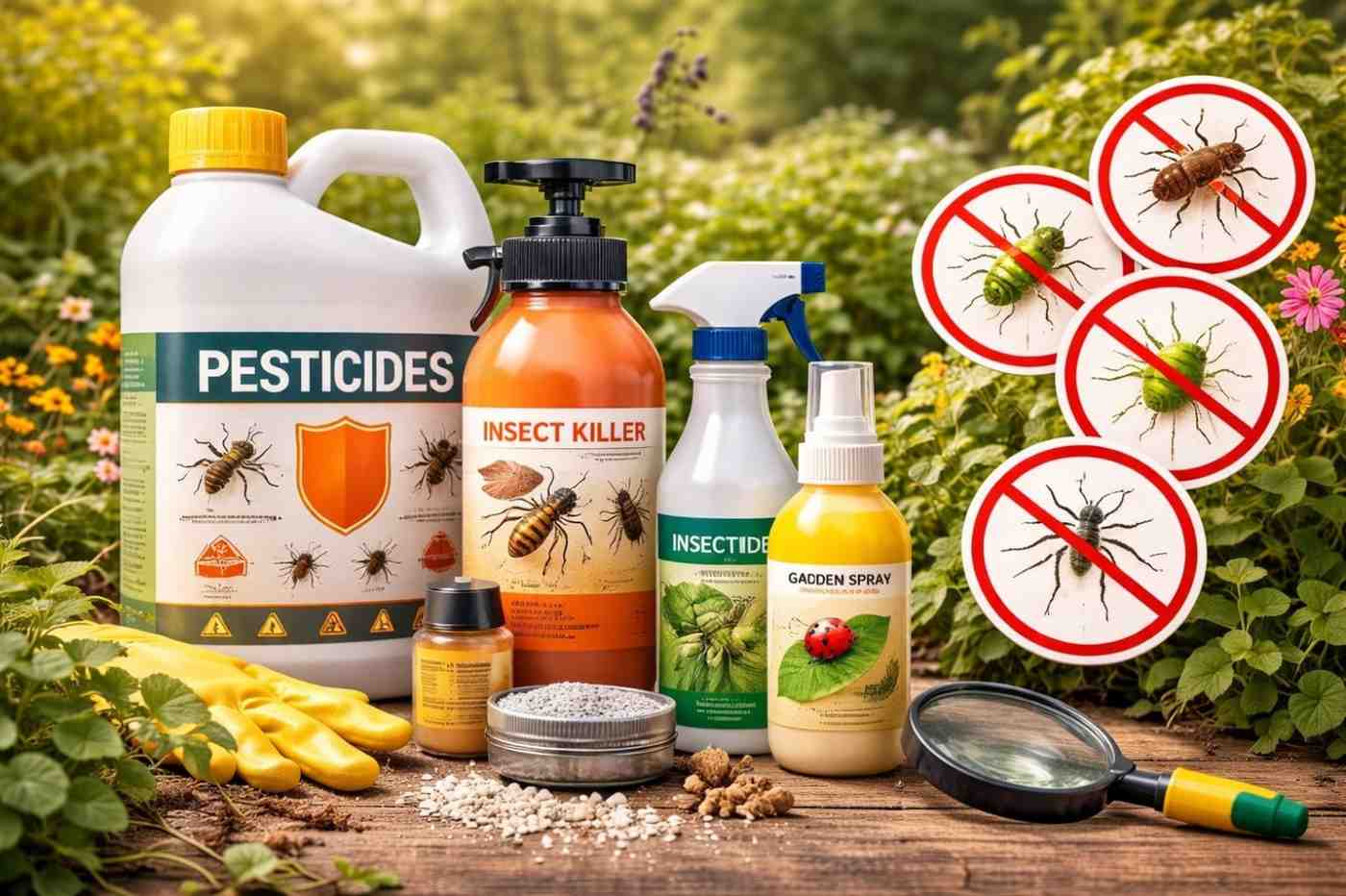
What are pesticides?
Pesticides are chemical or biological substances used to kill, repel, or control pests that damage crops, spread disease, or invade our homes. Whether you’ve noticed a bottle of bug spray under your kitchen sink or heard about herbicides on a farm, you’ve already encountered the world of pesticides.
Understanding what pesticides are and how they work is essential not just for farmers, but for anyone who eats food, lives in a home, or cares about the environment. From protecting wheat fields to preventing malaria, pesticides play a massive, often invisible role in modern life.
In this complete guide, we’ll break down the types, uses, benefits, examples, safety tips, and key facts about pesticides in a simple and easy-to-understand way.
Quick Answer

Pesticides are substances (chemical or natural) designed to prevent, destroy, repel, or mitigate any pest, including insects, weeds, fungi, rodents, and bacteria, that harm crops, property, or human health.
- Used widely in agriculture to protect crops from pests and weeds
- Applied in homes to control insects like cockroaches, ants, and mosquitoes
- Used in public health to control disease-carrying pests (e.g., mosquitoes spreading malaria)
- They include insecticides, herbicides, fungicides, rodenticides, and more
- Must be used carefully to minimize risks to human health and the ecosystem
What are Pesticides in Agriculture?
In agriculture, pesticides are one of the most essential tools available to farmers. They protect crops from insects, weeds, diseases, and other organisms that would otherwise devastate harvests. Without pesticides, an estimated 20–40% of global crop yields would be lost to pests every year.
Role of Pesticides in Crop Protection
- Protect plants from insect attacks at various growth stages
- Prevent fungal and bacterial infections from spreading across fields
- Eliminate competing weeds that steal nutrients, water, and sunlight
- Enable consistent, large-scale food production to meet global demand
Impact on Food Production
Pesticides in agriculture directly contribute to food security. They allow farmers to grow more food on the same amount of land. Without them, fruits, vegetables, and grains would be more expensive, scarcer, and often visually unappealing due to pest damage.
Types of Pesticides
Pesticides are classified based on the type of pest they target. Here are the main types of pesticides:
🦟 Insecticides
Target and kill insects that harm crops or spread disease. The most widely used pesticide type.
🌿 Herbicides
Control or kill unwanted weeds and plants that compete with crops for resources.
🍄 Fungicides
Prevent or eliminate fungal diseases in crops, plants, and seeds.
🐀 Rodenticides
Used to control mice, rats, and other rodents that damage crops or spread disease.
🐌 Molluscicides
Target snails and slugs that feed on crops, especially in rice paddies.
🦠 Bactericides
Control bacterial plant diseases that can wipe out entire crops.
Pesticides Examples
Here are some common real-world pesticides examples organized by type:
Insecticide Examples
- Chlorpyrifos — Used on corn, soybeans, and fruit trees
- Malathion — Common in mosquito control programs
- Permethrin — Used in household sprays and clothing treatment
Herbicide Examples
- Glyphosate (Roundup) — One of the world’s most used herbicides
- Atrazine — Widely used on corn crops in the USA
- 2,4-D — Selective herbicide used on lawns and cereal crops
Fungicide Examples
- Copper Sulfate — Traditional fungicide for fruits and vegetables
- Mancozeb — Used on potatoes, tomatoes, and grapes
- Propiconazole — Applied on wheat and other cereals
Rodenticide Examples
- Brodifacoum — Used in homes and warehouses for rat control
- Zinc Phosphide — Common in field crop rodent management
Uses of Pesticides
The uses of pesticides extend far beyond just farming. Here’s how they’re applied across different areas:
1. Agriculture
- Protecting crops like rice, wheat, corn, cotton, and fruits from pests
- Controlling weeds in large-scale farming operations
- Treating seeds before planting to prevent early-stage diseases
2. Home Pest Control
- Eliminating cockroaches, ants, termites, bed bugs, and flies
- Lawn and garden care products available at retail stores
- Preventing structural damage from wood-boring insects like termites
3. Public Health
- Spraying programs to control malaria-carrying mosquitoes
- Managing dengue fever outbreaks in urban areas
- Controlling ticks and fleas that spread Lyme disease and typhus
4. Forestry & Non-Agricultural Uses
- Protecting timber from wood-destroying beetles and fungi
- Managing invasive plant species in natural parks
- Controlling pests along railroad tracks and power lines
Benefits of Pesticides
- Increased Crop Yields: Pesticides protect crops from pest damage, allowing farmers to produce more food per hectare of land.
- Lower Food Costs: Higher productivity leads to greater supply, which helps keep food prices affordable for consumers worldwide.
- Disease Prevention: Controlling mosquitoes, ticks, and other disease vectors saves millions of lives from malaria, dengue, and other illnesses.
- Better Food Quality: Pesticides reduce pest-related damage, resulting in healthier, more visually appealing produce at the market.
- Global Food Security: Pesticides are a critical component in feeding the world’s growing population of over 8 billion people.
- Structural Protection: Termiticides and rodenticides protect homes and buildings from costly structural damage caused by pests.
Facts About Pesticides
Global annual pesticide market value as of recent estimates
Active pesticide ingredients currently registered for use worldwide
Estimated crop loss without any form of pest management
Era when modern synthetic pesticide use first became widespread
Interesting & Lesser-Known Facts
- The word “pesticide” comes from the Latin pestis (plague) + caedere (to kill).
- Some pesticides are naturally derived — neem oil, pyrethrins (from chrysanthemums), and spinosad (from soil bacteria) are examples of biopesticides.
- Pesticide residues are regulated and monitored in food supplies by agencies like the EPA and FDA to ensure they remain at safe levels.
- Over 98% of sprayed insecticides and 95% of herbicides reach destinations other than their target pest — including soil, air, water, and non-target organisms.
- Some insects have developed pesticide resistance over time, making it harder to control them with the same chemicals.
⚠️ Environmental Note: While pesticides offer enormous benefits, their overuse or misuse can harm beneficial insects like bees, contaminate waterways, and disrupt soil health. Responsible use is key.
Pesticides Products in USA
The United States is one of the world’s largest users of pesticides. Here’s an overview of popular categories and the regulatory framework:
Commonly Used Product Categories
- Herbicides — Account for the largest share of pesticide use in the USA, especially glyphosate-based products like Roundup
- Insecticides — Products like Sevin (Carbaryl), Ortho Bug B Gon, and neonicotinoid-based sprays
- Fungicides — Used widely in California vineyards and Florida citrus groves
- Termiticides — Products like Termidor (Fipronil) used in home protection
- Rodenticides — Brands like D-Con are common consumer products
Regulatory Overview
In the United States, pesticides are regulated primarily by the Environmental Protection Agency (EPA) under the Federal Insecticide, Fungicide, and Rodenticide Act (FIFRA). All pesticides must be registered with the EPA before they can be legally sold or used. The FDA monitors pesticide residues in food, and the USDA also plays a role in agricultural pesticide oversight.
Risks and Safety Tips
While pesticides are highly useful, they come with important safety considerations for both people and the planet.
Potential Risks
- Human health: Overexposure can cause skin irritation, respiratory issues, hormonal disruption, or in severe cases, poisoning
- Wildlife impact: Can harm birds, fish, bees, and other beneficial organisms when used improperly
- Water contamination: Runoff can pollute rivers, lakes, and groundwater sources
- Soil degradation: Repeated use can disrupt the natural microbial balance of healthy soil
- Resistance: Overuse can lead to pest populations developing resistance to chemicals
Safe Usage Guidelines
- Always read and follow label instructions carefully
- Wear protective gear: gloves, masks, and goggles when applying
- Store pesticides in original containers, away from children and food
- Apply only the recommended amount — more is not better
- Avoid applying before rain to prevent water runoff
- Use targeted, spot treatments rather than widespread spraying when possible
- Consider Integrated Pest Management (IPM) — combining biological, cultural, and chemical methods
Final Thoughts
Pesticides are powerful tools that have fundamentally transformed agriculture, public health, and everyday pest management. They help feed billions of people, prevent deadly diseases, and protect our homes and crops from destructive pests.
However, understanding what is pesticides means recognizing both their benefits and their risks. From insecticides and herbicides to fungicides and rodenticides, each type serves a specific purpose, and each must be used thoughtfully.
The goal isn’t to eliminate pesticide use overnight, but to use them responsibly — following safety guidelines, exploring natural alternatives where feasible, and supporting good agricultural practices that protect both people and the planet. A balanced, informed approach to pesticides is the way forward.
Frequently Asked Questions
Pesticides are used to control, repel, or kill organisms that are harmful to crops, human health, or property. Their main uses include agricultural crop protection, home pest control (insects, rodents), and public health programs that fight disease-carrying pests like mosquitoes.
At very high or prolonged levels of exposure, pesticides can be harmful, potentially causing skin irritation, respiratory issues, or more serious health effects. However, when used correctly and at regulated levels, pesticides are considered safe. Regulatory agencies like the EPA set legal limits to protect public health.
Natural alternatives include: neem oil (effective against many insects), diatomaceous earth (kills soft-bodied insects), companion planting (using certain plants to deter pests), beneficial insects (like ladybugs that eat aphids), row covers, and crop rotation. Biopesticides derived from natural materials are also a growing alternative.
Pesticides can affect the environment by contaminating soil and water through runoff, harming non-target organisms like bees, birds, and aquatic life, and disrupting natural ecosystems. However, modern pesticide formulations and application methods are increasingly designed to minimize environmental impact.
Glyphosate, sold under brand names like Roundup, is currently the most widely used pesticide in the world. It is a broad-spectrum herbicide used primarily in agriculture to control weeds in crops, particularly those genetically modified to be glyphosate-resistant.
Organic pesticides are derived from natural sources (plants, bacteria, minerals) and are approved for use in organic farming. Conventional pesticides are typically synthetic chemicals. Both can be effective, but organic options are generally considered to have lower environmental impact — though they are not always completely risk-free.
In the USA, the Environmental Protection Agency (EPA) is the primary regulator of pesticides under the Federal Insecticide, Fungicide, and Rodenticide Act (FIFRA). The FDA oversees pesticide residue levels in food, and the USDA monitors agricultural applications. All pesticide products must be EPA-registered before sale.
Yes, you can use pesticides safely at home by always reading product labels, wearing protective gear, keeping children and pets away during application, storing chemicals properly, and using only the recommended quantities. When possible, try non-chemical methods first and consider calling a professional exterminator for serious infestations.