
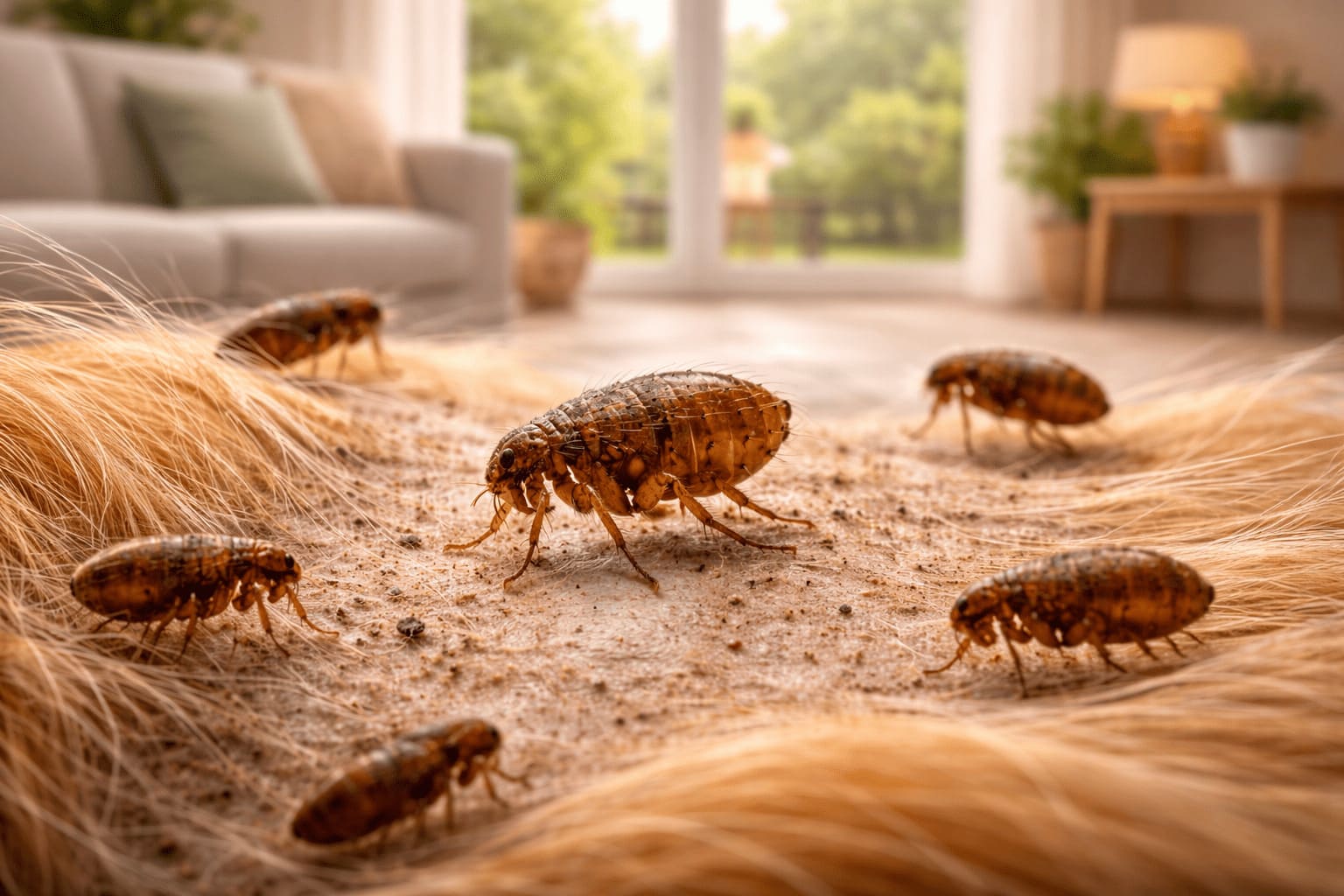
You spotted it: a tiny, fast-moving speck leaping off your dog’s fur, or a cluster of itchy red welts on your ankles. It is every pet owner’s nightmare: a flea infestation. And if you have experienced one before, you know how quickly a few fleas can spiral into a full-blown household crisis.
Fleas are not just annoying. They are a genuine health threat to both pets and people. They reproduce at a staggering rate, with one female laying 20-30 eggs per day (Source: Fleascience). They hide in carpets and furniture and can survive in your home for months even without a host. The good news is that with the right approach, you can eliminate them completely.
This guide covers everything: understanding the flea life cycle, identifying infestation signs, treating your pets, applying the best flea home treatments, and locking in long-term flea prevention so fleas never return.
How to Get Rid of Fleas Fast – 6 Steps
Follow these six steps immediately to eliminate a flea infestation:
- Treat every pet in your household immediately using a vet-approved flea treatment such as a spot-on, oral tablet, or flea shampoo.
- Wash all bedding, including yours and your pet’s, on the hottest setting possible.
- Vacuum every surface thoroughly: carpets, rugs, furniture, cracks in floors, and along baseboards.
- Apply a flea home treatment spray or powder to carpets, upholstery, and pet resting areas.
- Use a flea bomb (fogger) for severe infestations, following all safety precautions carefully.
- Repeat the full process every 7 to 14 days for at least four to eight weeks to break the complete flea life cycle.
What Are Fleas and Why Are They Dangerous?
Fleas are tiny, wingless parasites that survive by feeding on the blood of warm-blooded animals, including your cats, dogs, and humans. The most common household species is Ctenocephalides felis (the cat flea), which infests both cats and dogs despite its name.
Understanding the flea life cycle is critical for successful elimination. Fleas pass through four stages: egg, larva, pupa, and adult. The pupal stage is the most resistant. Pupae can lie dormant in carpets and furniture for up to six months and are immune to most pesticides. This is why infestations persist long after you believe they are gone.
Flea Bites: What Do They Look Like?
Flea bites on humans typically appear as small, red, intensely itchy bumps, often in clusters of three, around the ankles, feet, and lower legs. Unlike mosquito bites, they do not swell significantly but have a distinct red halo around the bite center. Scratching can break the skin and cause secondary infections.
Flea Diseases: The Real Health Risk
Fleas can transmit serious diseases to both pets and humans. The primary flea diseases to be aware of include:
- Murine Typhus: a bacterial infection transmitted via flea feces, causing fever, headache, and rash.
- Bubonic Plague: rare but still reported, transmitted by infected fleas from wild rodents.
- Cat Scratch Disease (Bartonella): spread when fleas transfer bacteria between cats and humans.
- Tapeworms: pets and children can accidentally ingest infected fleas, leading to tapeworm infection.
- Flea Allergy Dermatitis (FAD): the most common skin disease in dogs and cats; a single bite can trigger intense allergic reactions.
Signs of a Flea Infestation
Catching a flea infestation early saves enormous time and effort. Watch for these key flea infestation signs:
- Excessive scratching, biting, or licking in pets, especially around the neck, tail base, and belly.
- Flea dirt (flea feces): tiny black or reddish-brown specks on your pet’s skin or bedding that turn red when wet.
- Visible fleas: fast-moving brownish specks in your pet’s fur or jumping across light-colored floors.
- Bite marks on humans: clusters of small, red, itchy bites around ankles and legs.
- Hair loss or scabs on pets: signs of flea allergy dermatitis.
- The white sock test: walk across carpet in white socks; if fleas are present, they will jump onto the fabric.
- Moving specks in bedding: fleas visible on mattresses or in pet beds.
Also Read: Signs of a Termite Infestation
Step-by-Step Flea Removal Process
Step 1: Treat Your Pets First
Every pet in the household must be treated on the same day. Use a vet-approved product such as a topical spot-on (like Frontline or Advantage), an oral flea tablet (Capstar works within 30 minutes), or a quality flea shampoo. Without treating the source, home treatment is futile.
Step 2: Launder Everything on High Heat
Wash all bedding, cushion covers, soft toys, and rugs in hot water (at least 60 degrees Celsius or 140 degrees Fahrenheit) and tumble dry on high. Heat kills fleas at all life stages. Complete this on the same day as treating your pets.
Step 3: Deep Vacuum Your Entire Home
Vacuum every inch of carpet, upholstery, mattresses, floorboards, and along baseboards. The vibration from vacuuming stimulates pupae to hatch, making them vulnerable to treatment. Immediately seal and discard the vacuum bag, or empty the canister outside.
Step 4: Apply Flea Home Treatment
Spray a flea-specific insecticide containing an IGR (Insect Growth Regulator such as methoprene or pyriproxyfen) on all carpets, rugs, pet beds, and furniture bases. IGRs stop juvenile fleas from developing into breeding adults. This is the single most important chemical step in flea home treatment.
Step 5: Consider a Flea Bomb for Severe Cases
For heavy infestations, flea bombs release an insecticide mist throughout a room. Use one fogger per room, evacuate all humans and pets, cover food surfaces, and ventilate thoroughly afterward. Always combine flea bombs with prior vacuuming for best results.
Step 6: Repeat for Four to Eight Weeks
The pupal stage can survive initial treatment. Vacuum daily for two weeks, then weekly for another six weeks. Re-apply home treatment at weeks two to three. Continue pet treatments monthly. Consistency, not intensity, wins the battle against fleas.
Flea Control for Cats and Dogs
Flea Control for Dogs
For dogs, the most effective options are monthly topical spot-on treatments applied to the back of the neck, or oral chewable tablets. Popular choices include NexGard, Bravecto, Frontline Plus, and Simparica. Always choose products appropriate for your dog’s weight and age, and never use cat flea products on dogs, as some can be toxic.
Flea Control for Cats
Flea control for cats requires extra caution. Cats are highly sensitive to pyrethrins and pyrethroids, chemicals found in many dog flea products and even some natural sprays. Use only vet-approved cat-specific products such as Advantage II for Cats, Revolution (which also targets ear mites), or Bravecto for Cats.
Important: Never apply dog flea products to cats. Permethrin-based spot-ons that are safe for dogs are highly toxic to cats and can cause severe neurological symptoms or death. Always read labels carefully before use.
Best Flea Home Treatments: Natural vs. Chemical Options
Natural Flea Remedies
Natural remedies work best as preventive measures or for very mild infestations:
- Diatomaceous earth: sprinkle food-grade DE on carpets, leave for 24 to 48 hours, then vacuum. It dehydrates and kills adult fleas mechanically.
- Salt: fine salt dehydrates flea eggs and larvae on carpets. Leave overnight and vacuum thoroughly.
- Dish soap flea trap: fill a shallow bowl with warm water and a few drops of dish soap and place under a nightlight. Fleas are attracted to the light and drown in the soapy water.
- Cedar chips or cedar oil: a natural flea repellent effective for outdoor areas and pet bedding.
- Lemon spray: boil sliced lemons, let steep overnight, then spray on furniture and carpets. Do not apply directly on pets.
Chemical Flea Treatments
For established infestations, chemical treatments are necessary:
- IGR sprays containing methoprene: the gold standard for breaking the flea life cycle indoors.
- Permethrin sprays: fast knockdown of adult fleas on carpets and furniture. Not for use on or near cats.
- Flea bombs and foggers: best for large-scale infestations across multiple rooms.
- Flea powders: applied to carpets and rugs for targeted area treatment.
- Professional extermination: for persistent or severe infestations, a licensed pest control company will use commercial-grade products with heat treatment options.
Do Flea Bombs Really Work?
Flea bombs (aerosol foggers) can be effective tools but are widely misunderstood. A fogger releases a fine insecticide mist that settles on exposed surfaces such as carpets, furniture tops, and floors. They do not penetrate deep into carpet fibers, get under furniture, or reach inside cracks and crevices where most eggs and larvae live.
| Flea Bomb Pros | Flea Bomb Cons |
| Covers large areas quickly | Does not reach under furniture or deep into carpets |
| Kills adult fleas on contact | Most products do not contain IGRs (life cycle interrupters) |
| Good for whole-room treatment | Requires full evacuation of pets and people |
| Affordable and widely available | Residue on surfaces requires thorough cleanup |
Best practice: Vacuum first, then use a flea bomb, then follow up with an IGR spray in target areas within 48 hours.
Flea Prevention Tips: Stop Them Before They Start
Prevention is far easier and cheaper than treating a full infestation. These flea prevention tips will protect your home year-round:
- Monthly pet treatments with no gaps. Skipping even one month can allow a new infestation to take hold.
- Vacuum weekly. Regular vacuuming removes eggs, larvae, and adults before they can establish.
- Wash pet bedding weekly on a hot cycle.
- Treat your yard. Use yard flea sprays or beneficial nematodes in shaded, humid areas where pets rest outside.
- Limit wildlife access. Raccoons, opossums, and stray cats carry fleas. Seal off crawl spaces and under-deck areas.
- Inspect pets after outdoor activity, especially after visits to dog parks or wooded areas.
- Annual vet check-ups to review and update your pet’s parasite prevention plan.
Common Mistakes to Avoid
- Treating only your pets, not your home. Up to 95 percent of flea eggs, larvae, and pupae live in your environment, not on your pet.
- Stopping treatment too early. Most people quit after a week when they stop seeing adult fleas, but pupae are still dormant and ready to hatch.
- Treating only one pet. All animals in the home must be treated simultaneously on the same day.
- Using a flea bomb without vacuuming first. Vacuuming before fogging activates dormant pupae, making them vulnerable to the insecticide.
- Using dog flea products on cats. This is potentially fatal. Always use species-specific treatments.
- Relying solely on natural remedies for heavy infestations. Natural options support, but do not replace, chemical treatments for established infestations.
- Forgetting the car. If your pet rides in your vehicle, treat it too: vacuum seats and apply a flea spray.
Final Thoughts
Knowing how to get rid of fleas is half the battle. The other half is being consistent and thorough. Fleas survive by exploiting gaps in your treatment plan, so a coordinated, multi-step approach targeting both your pets and your environment is the only way to win.
Start today: treat every pet, vacuum aggressively, launder everything, and apply an IGR-containing home spray. Commit to repeating the process over the next four to eight weeks. The result is a flea-free home, a happier pet, and peace of mind knowing your family is protected from flea diseases and bites.
When in doubt, consult your veterinarian for the best flea control approach specific to your situation, especially for kittens, puppies, pregnant pets, or animals with existing skin conditions.
Frequently Asked Questions
A full flea elimination cycle typically takes 3 to 8 weeks. Adult fleas die within days of treatment, but eggs and dormant pupae embedded in carpets and furniture continue to hatch for weeks. Consistent treatment and vacuuming throughout this period is essential to complete elimination.
Flea bombs work for adult fleas on exposed surfaces but have significant limitations. They do not penetrate carpet fibers, reach under furniture, or kill eggs and pupae effectively. For best results, always vacuum before using a fogger and follow up with an IGR-containing spray in targeted areas.
Yes. Flea pupae can remain dormant in carpets, floorboards, and upholstery for up to six months without a host. Once a warm-blooded host enters the space, they hatch and begin feeding. This is why homes with no current pets can still harbor flea infestations left behind by a previous occupant.
Contact insecticides containing pyrethrin, permethrin, or imidacloprid kill adult fleas on contact. For pets, oral flea treatments like Capstar kill adult fleas within 30 minutes. A dish soap bath also suffocates adult fleas quickly, though it has no residual protective effect.
Flea bites can be more than itchy. They can transmit diseases including murine typhus and cat scratch disease, and in rare cases bubonic plague via rodent fleas. Fleas can also transmit tapeworm segments. People with flea bite allergies may experience hives or severe skin reactions requiring medical attention.
Permanent flea prevention requires consistent monthly pet treatments with no gaps, weekly vacuuming, regular washing of pet bedding, yard treatment during warm months, and annual vet check-ups to review your prevention plan. Ongoing consistency is the only true long-term solution.
The most effective natural flea remedies include food-grade diatomaceous earth sprinkled on carpets, a dish soap flea trap placed near a light source at night, cedar oil or cedar chips as a repellent, and a salt and baking soda carpet treatment. These work best as supplemental measures for mild infestations or as part of ongoing prevention.
Most flea treatments are safe when used as directed. Keep children out of treated rooms until surfaces are completely dry and ventilate thoroughly after using flea bombs. For homes with very young children or infants, consult your veterinarian or a pest control professional about the safest product options available.