
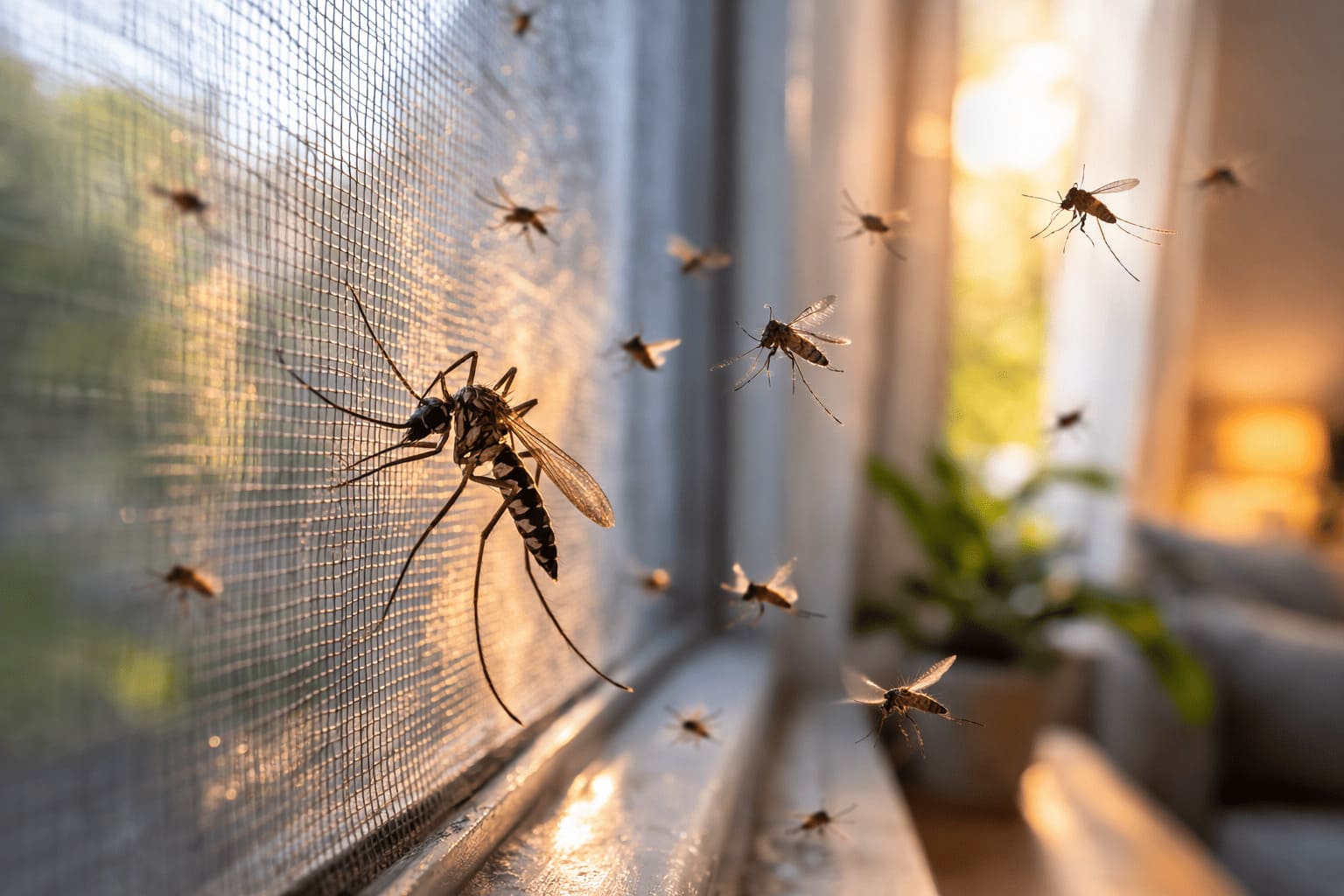
Mosquitoes are more than a seasonal annoyance. They are the world’s deadliest insects, responsible for transmitting diseases like dengue fever, malaria, chikungunya, and the Zika virus. Whether you are dealing with mosquitoes inside your home, in your garden, or near standing water, this guide covers every proven method to eliminate them and keep them from coming back.
What Attracts Mosquitoes to Your Home?
Before you can effectively get rid of mosquitoes, you need to understand what draws them in. Mosquitoes are attracted to:
- Carbon dioxide (CO₂): Humans exhale CO₂, which mosquitoes detect from up to 50 meters away.
- Body heat and sweat: Lactic acid and ammonia in sweat are strong attractants.
- Standing water: Even a bottle cap of stagnant water is enough for a mosquito to lay eggs.
- Dark clothing: Mosquitoes use vision to locate hosts, and darker colours make you more visible.
- Floral fragrances: Perfumes and scented lotions can mimic flower nectar.
Understanding these triggers is the first step toward effective mosquito control at home.
How to Get Rid of Mosquitoes Inside the House
Indoor mosquito control requires a multi-layered approach. Here is what works best:
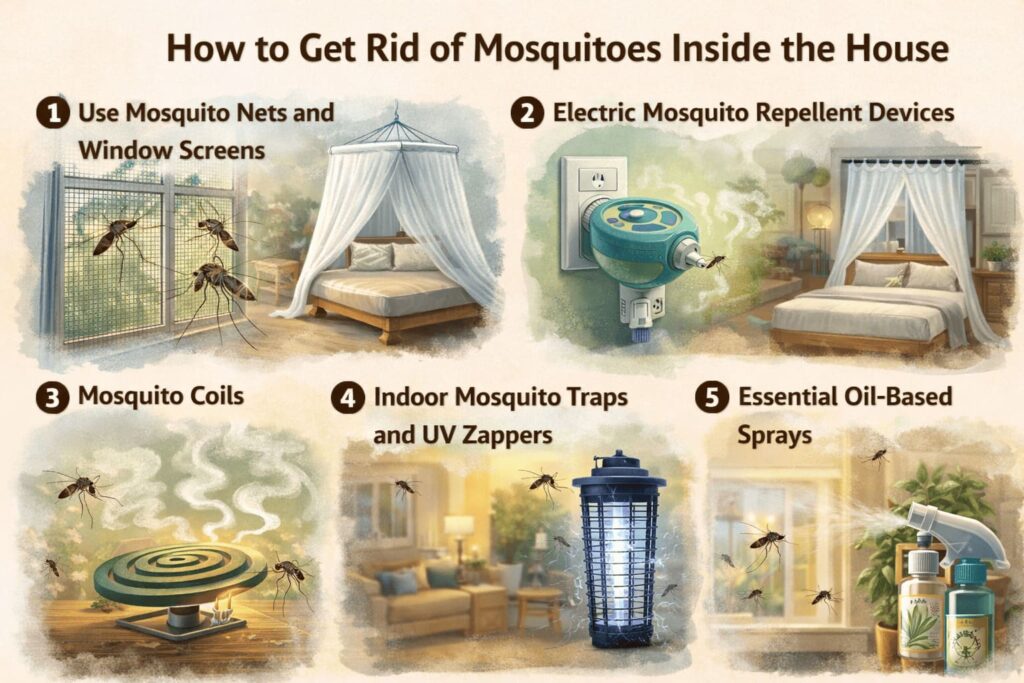
1. Use Mosquito Nets and Window Screens
Installing fine-mesh screens on windows and doors is one of the most reliable ways to keep mosquitoes out of the house. For sleeping areas, use bed nets, particularly in regions where dengue or malaria is prevalent. Look for nets treated with permethrin for added protection.
2. Electric Mosquito Repellent Devices
Plug-in vaporisers and liquid electric mosquito repellents release low-level insecticide vapours that are effective indoors. Brands using transfluthrin or prallethrin are widely recommended. These are safe for most households when used as directed in a ventilated space.
3. Mosquito Coils
Mosquito coils are a low-cost, widely available option. They are best used in semi-open areas like verandas or patios. Avoid prolonged indoor use in enclosed rooms, as the smoke can irritate the respiratory system.
4. Indoor Mosquito Traps and UV Zappers
UV mosquito traps attract and kill mosquitoes using light and suction. While they do not eliminate an infestation on their own, they are effective as a supplementary indoor measure, especially for bedrooms.
5. Essential Oil-Based Sprays
Certain essential oils have proven mosquito-repelling properties. Spray diluted solutions around entry points and resting areas:
- Eucalyptus oil (lemon eucalyptus is EPA-recognised)
- Lavender oil
- Peppermint oil
- Citronella oil
Mix 10–15 drops with 100ml of water or carrier oil and spray on curtains, under furniture, and near windows.
How to Get Rid of Mosquitoes in Your Yard and Garden
Outdoor mosquito control starts with eliminating breeding grounds.
1. Remove All Sources of Standing Water
This is the single most impactful thing you can do. Mosquitoes breed in still water and their larvae can develop in as little as 7–10 days. Check and clear:
- Flower pots and saucers
- Clogged gutters and roof drains
- Unused tyres
- Bird baths (change water every 2–3 days)
- Buckets, containers, and tarps collecting rainwater
- Low-lying areas of your lawn that retain puddles
2. Use Mosquito Dunks in Water You Cannot Drain
For ponds, water features, or rain barrels you cannot drain, use Bacillus thuringiensis israelensis (Bti), a naturally occurring bacteria that kills mosquito larvae without harming fish, birds, or other wildlife. Available as “mosquito dunks,” they are safe and highly effective.
3. Plant Natural Mosquito-Repelling Plants
Several plants act as natural deterrents when planted near doors, patios, and windows:
- Citronella grass (the source of citronella oil)
- Tulsi (Holy Basil) (a traditional Indian remedy with proven efficacy)
- Marigold (contains pyrethrum, a natural insecticide)
- Lemongrass
- Catnip (studies show it may be more effective than DEET in direct contact)
4. Outdoor Mosquito Sprays and Yard Foggers
For large outdoor areas, residual insecticide sprays containing bifenthrin or permethrin can be applied to shrubs, grass, and shaded areas where mosquitoes rest. Yard foggers offer fast knockdown but require reapplication after rain. Always follow label instructions and avoid applying near water bodies or pollinator plants.
5. Install Outdoor Fans
Mosquitoes are weak fliers. A simple outdoor fan on your patio creates airflow that makes it very difficult for mosquitoes to land on you. Direct the fan low, as mosquitoes tend to fly close to the ground.
Natural and Home Remedies to Repel Mosquitoes
If you prefer to avoid chemicals, these natural mosquito repellent methods are backed by evidence:
Camphor
Camphor is one of the most traditional and effective natural mosquito repellents. Light a camphor tablet and close all doors and windows for 15–20 minutes. The vapour drives mosquitoes away effectively. Camphor is biodegradable and safe in small quantities.
Garlic Spray
Boil a few crushed garlic cloves in water, cool the solution, and spray it around the room or yard. The strong sulphur compounds in garlic are unpleasant to mosquitoes.
Neem Oil
Neem oil has both larvicidal and repellent properties. Mix it with coconut oil and apply it to exposed skin, or add a few drops to a diffuser. It is a cost-effective, non-toxic option for families with children.
Apple Cider Vinegar Traps
Fill a glass with apple cider vinegar and add a drop of dish soap. The vinegar attracts mosquitoes while the soap breaks surface tension, trapping them. These work best as part of an integrated approach.
How to Protect Yourself Personally from Mosquito Bites
No matter how well you control your environment, personal protection remains essential, especially outdoors at dawn and dusk when mosquitoes are most active.
- Use EPA-registered repellents: DEET (20–30%), picaridin, or oil of lemon eucalyptus (OLE) are the most effective. Apply to all exposed skin.
- Wear full-sleeved, light-coloured clothing when outdoors in high-risk areas.
- Avoid strong perfumes and scented lotions before outdoor activities.
- Stay indoors during peak mosquito hours: dawn, dusk, and early evening.
When to Call a Professional Pest Control Service
DIY methods work well for mild to moderate infestations. However, you should consider professional mosquito control if:
- Mosquito activity persists despite eliminating all standing water and using repellents
- You live in an area with reported dengue, chikungunya, or malaria outbreaks
- Your property has a large water body, dense vegetation, or drainage issues
- You have young children, elderly residents, or immunocompromised individuals at home
Professionals use residual treatments, larviciding of drains and gutters, and thermal fogging to deliver longer-lasting results.
| Method | Best For | Effectiveness |
| Remove standing water | Prevention | Very High |
| Window screens & nets | Indoor protection | Very High |
| DEET/picaridin repellent | Personal protection | Very High |
| Mosquito dunks (Bti) | Ponds, water features | High |
| Electric vaporisers | Indoors | High |
| Outdoor fan | Patios and verandas | Moderate–High |
| Citronella/neem oil | Natural repellent | Moderate |
| Mosquito coils | Semi-outdoor | Moderate |
| UV traps | Supplement indoors | Moderate |
| Camphor | Indoor short-term | Moderate |
Final Thoughts
Taking a consistent, integrated approach, which includes eliminating breeding sites, using repellents, and applying treatments when necessary, is the most effective way to get rid of mosquitoes and protect your family throughout the season.
Frequently Asked Questions
The fastest approach combines two actions: apply a residual insecticide spray to resting areas indoors and outdoors, and remove all standing water on your property. Together, these actions cut the adult population immediately while eliminating the next generation before it emerges.
Mosquitoes strongly dislike the smell of citronella, eucalyptus (especially lemon eucalyptus), lavender, garlic, peppermint, and camphor. Among commercial repellents, DEET and picaridin are the most effective at masking human scent signals.
Use a plug-in electric mosquito repellent before going to sleep, keep windows and doors closed or screened, and sleep under a mosquito net if needed. UV mosquito zappers placed away from the bed can also help reduce numbers overnight.
Yes. Any source of standing water indoors, including vases, plant pots, pet water dishes, and AC drip trays, can support mosquito breeding. Inspect and empty these regularly.
Yes, but only as a mild deterrent. Plants like citronella grass, tulsi, and marigold release compounds that mosquitoes dislike. Their effect is localised, so they work best when planted densely around sitting areas or when leaves are crushed to release oils, rather than as a standalone solution.
With consistent effort, including removing standing water, applying larvicide, and using repellents, most infestations show a noticeable reduction within one to two weeks. Full control may take three to four weeks depending on the level of infestation and weather conditions.
DEET-based repellents should not be used on children under two months. The CDC recommends picaridin or oil of lemon eucalyptus as safer alternatives for older children. Keep all chemical sprays away from pets, especially cats, who are sensitive to pyrethrins. Bti (mosquito dunks) is safe for pets, fish, and wildlife.
Oil of lemon eucalyptus (OLE) is the only plant-based repellent currently recommended by the US CDC and EPA as an effective alternative to DEET. Neem oil and citronella also have strong evidence supporting their use as short-duration repellents.